How Visitors, Residents, and Local Businesses Can Thrive Together
Western North Carolina has long been known for its breathtaking mountain vistas, vibrant arts community, award-winning restaurants, and welcoming small-town charm. Tourism isn't simply part of our identity—it's one of the economic engines that helps our communities flourish. For Asheville and many surrounding communities, visitors support thousands of local jobs, from restaurant staff and hotel employees to artists, musicians, outdoor guides, retailers, and countless small business owners. Every meal enjoyed at a locally owned restaurant, every gallery visited, and every night spent in local accommodations creates a ripple effect throughout our regional economy. Just as importantly, overnigh visitors contribute through occupancy taxes collected on lodging. Those revenues help fund tourism promotion, destination improvements, and many of the amenities that both visitors and residents enjoy, allowing local governments and tourism organizations to continue investing in the region's long-term success. (Asheville Government)
What Does It Mean to Be a Responsible Tourist?
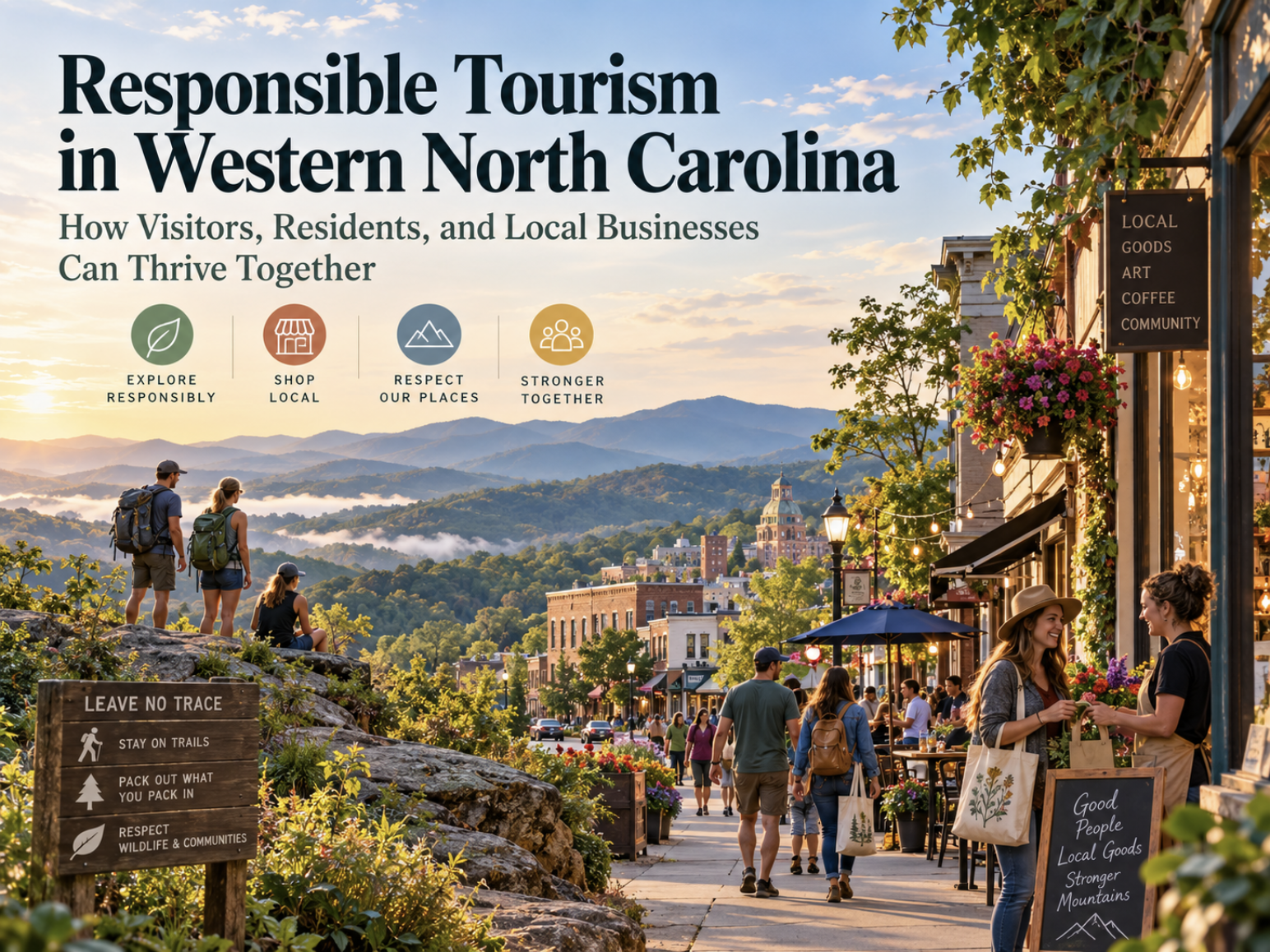
Responsible tourism is about leaving a place better than you found it—or at the very least, ensuring your visit has a positive impact on the community you're enjoying. A responsible visitor: ● Supports locally owned restaurants, breweries, shops, and outfitters. ● Respects neighborhoods by keeping noise levels down and observing parking regulations. ● Leaves trails, parks, and public spaces cleaner than they were found. ● Learns about the area's history and culture rather than simply passing through. ● Treats residents with the same courtesy they would expect in their own hometown. For residents, responsible tourism also means recognizing the tremendous value visitors bring to our local economy. Tourism supports jobs, generates business opportunities, and helps sustain many of the small businesses that make Western North Carolina such a unique place to live.
A Community That Recovered Together
Perhaps nowhere was the importance of tourism more evident than following Tropical Storm Helene. The storm created enormous challenges throughout Western North Carolina. Businesses closed temporarily, roads were damaged, and many hospitality workers faced uncertain futures. During the immediate recovery, visitors were appropriately encouraged to stay away while emergency crews restored essential services. Once communities reopened, however, local businesses needed visitors more than ever. Restaurants, breweries, galleries, hotels, and retailers depended on returning tourism to help rebuild revenues, rehire employees, and restore confidence in the local economy. (Axios) The recovery reminded many of us that tourism isn't simply about vacations—it supports livelihoods. Every reservation, every meal purchased, and every locally made souvenir became part of Western North Carolina's recovery story.
When Homeowners Become Hosts
Responsible tourism also extends to the people opening their homes to visitors. Many Asheville homeowners supplement their income through permitted homestays, renting one or two bedrooms while continuing to live in the home themselves. For some families, this additional income helps offset rising housing costs, fund home maintenance, or make homeownership more affordable. These homestays often provide visitors with a more authentic experience while allowing homeowners to share local recommendations that visitors may never discover otherwise. Like many communities across the country, Western North Carolina continues to balance these economic opportunities with the need to preserve long-term housing for residents.
Understanding Short-Term Rental Policies
Different communities throughout Western North Carolina have adopted different approaches to short-term rentals. Within Asheville city limits, the rules are among the most structured in the region. The city generally allows owner-occupied homestays—where the homeowner lives on-site and rents one or two bedrooms—but limits entire-home short-term vacation rentals to specific zoning districts. These regulations are intended to balance tourism with neighborhood stability and long-term housing availability. (Asheville Government) Nearby communities, including Weaverville and Black Mountain, have historically taken a less restrictive approach than Asheville, though property owners should always verify the latest local ordinances before purchasing or operating a short-term rental, as regulations can evolve. Brevard recently implemented additional regulations designed to preserve neighborhood character while continuing to allow responsible lodging options. The city's approach reflects a growing trend among mountain communities seeking to balance tourism with housing availability and quality of life for full-time residents. (City of Brevard)
Finding the Right Balance
Housing affordability remains an important conversation throughout Western North Carolina. While short-term rentals provide valuable income for many property owners, thoughtful regulations can also help preserve long-term housing inventory for local residents and reduce upward pressure on housing costs. There isn't a one-size-fits-all solution. Each community has different needs, and successful policy often requires balancing economic opportunity, tourism, neighborhood character, and housing availability.
We're All Part of the Same Community
Whether you've lived here your entire life or you're visiting for the first time, we all play a role in preserving what makes Western North Carolina special. Visitors help sustain local businesses, support jobs, and contribute to the local economy. Residents provide the hospitality, creativity, and authentic character that visitors come here to experience. Together, we create a community where tourism and everyday life can coexist in a way that benefits everyone. By choosing to travel thoughtfully, shop locally, respect neighborhoods, and support the people who call these mountains home, visitors become more than tourists—they become partners in preserving the place we all love.
- Asheville NC
- Western North Carolina
- Responsible Tourism
- Asheville Tourism
- WNC Tourism
- Blue Ridge Mountains
- Visit Asheville
- Local Businesses
- Shop Local Asheville
- Asheville Community
- Sustainable Tourism
- Mountain Communities
- Hurricane Helene Recovery
- Asheville Recovery
- Short-Term Rentals
- Asheville Homestays
- Vacation Rentals
- Buncombe County
- Black Mountain NC
- Weaverville NC
- Brevard NC
- Community Development
- Outdoor Recreation
- Leave No Trace
- Living in Western North Carolina