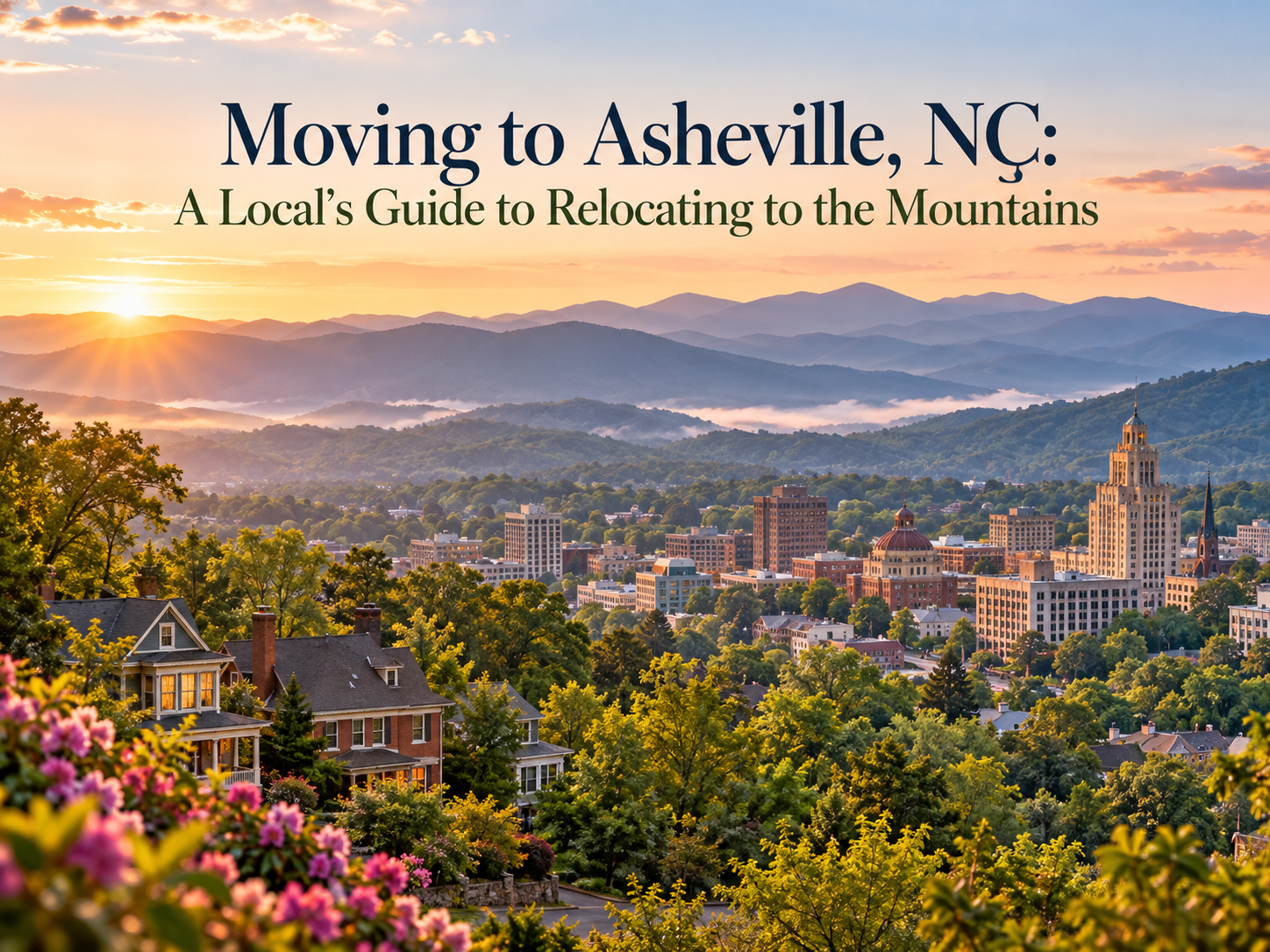
There's an energy about Western North Carolina that's difficult to explain until you've experienced it.
People have been drawn to these mountains for generations, whether for the beauty of the landscape, the creative atmosphere, or simply that hard-to-describe feeling of belonging.
But to understand the Asheville we know today, I think it's important to understand a little about where we've been.
A Place with Deep Roots
Long before Asheville was Asheville, these mountains were home to Indigenous peoples, including the Cherokee, whose history and cultural traditions remain deeply connected to Western North Carolina.
Our region has a rich cultural heritage, and music has always played an important role in its identity.
Western North Carolina's Appalachian musical traditions helped shape the development of bluegrass, old-time, and American roots music.
That musical heritage continues today, whether you're enjoying a local bluegrass band, stumbling upon an impromptu jam session, or attending a concert at one of our many intimate music venues.
Asheville's history as a town dates to the late 1700s. Originally known as Morristown, it was incorporated as Asheville in 1797.
For much of its early history, Asheville was a relatively isolated mountain community. That began changing with the Buncombe Turnpike in 1828, which opened an important trade route through the region.
A little local trivia: We even have a longtime bluegrass band called Buncombe Turnpike!
The Arrival of the Railroad and the Biltmore Estate
When the railroad arrived in 1880, Asheville became far more accessible to visitors and commerce.
People began traveling to the mountains to enjoy the cooler climate and beautiful scenery, and Asheville's reputation as a destination began to grow.
Among those drawn to the region was George Vanderbilt, who began construction of the magnificent Biltmore Estate in 1889.
The estate opened in 1895 and remains one of Asheville's most recognizable landmarks.
By the early 1900s, Asheville was flourishing as a destination for tourism and health retreats.
But our history hasn't been without its challenges.
In July 1916, devastating flooding along the French Broad and Swannanoa Rivers caused widespread destruction throughout Western North Carolina, including areas we know today as Biltmore Village and the River Arts District.
Yet Asheville continued to grow.
How the Great Depression Helped Preserve Asheville's Character
The 1920s brought an extraordinary period of development.
Many of the architectural treasures that define downtown Asheville today were constructed during this era, including the Grove Arcade, Asheville City Hall, and the S&W Cafeteria.
If you've ever walked through downtown Asheville, you've probably noticed something distinctive.
Our downtown doesn't look like every other city.
There is an architectural personality here that tells a story.
Interestingly, we have the Great Depression, at least in part, to thank for that.
Following the tremendous building boom of the 1920s, Asheville found itself burdened with extraordinary municipal debt.
While other municipalities sought bankruptcy protection or debt restructuring, Asheville committed to repaying its obligations. It would take decades, with the final bonds paid off by 1977.
The financial burden severely limited development for generations.
But there was an unexpected silver lining.
While cities across America demolished older buildings to make way for modern construction, Asheville simply didn't have the financial resources for widespread redevelopment.
We were frozen in time, preserving an architectural time capsule from another era.
The beautiful buildings of the 1920s survived, and today they are among the defining characteristics of our city.
To me, this is such a fascinating part of Asheville's history. What was once an enormous financial hardship ultimately helped preserve something incredibly special.
A Creative Spirit That Refuses to Disappear
While Asheville struggled financially during much of the 20th century, its creative spirit continued to flourish.
In 1933, Black Mountain College was founded in the Swannanoa Valley.
This groundbreaking experimental liberal arts college brought together artists, writers, musicians, and forward-thinking educators who believed creativity should be central to learning.
Its legacy helped establish Western North Carolina as a place where artistic expression and unconventional thinking could thrive.
That spirit still exists here today.
Beginning in the 1980s and 1990s, downtown Asheville experienced a remarkable revitalization. Historic buildings were restored, independent restaurants and shops filled once-empty storefronts, and artists transformed former industrial spaces into studios and galleries.
The result is the vibrant, eclectic community that so many people have come to love.
And once again, our region has had to demonstrate its resilience.
Hurricane Helene's devastating impact in September 2024 brought extraordinary challenges to Western North Carolina. Recovery and rebuilding continue to be part of our story.
As with the hardships of generations past, our community has responded with determination, collaboration, and a deep commitment to one another.
Asheville isn't simply a beautiful place to live. It's a community with a rich history, a creative soul, and people who genuinely care about the place they call home.
And for me, that's part of what makes these mountains so special.
Continue exploring: Moving to Asheville, NC — A Local's Guide to Relocating to the Mountains
- Relocation
- Asheville
- Western North Carolina